How to build the "Vision presentation" that gets your leadership aligned and your team on board

Whether you lead category management, sales, trade marketing, or RGM, the leaders who build and sell a strong vision for their function are the ones who move the needle. Those teams become more strategic with their retail partners and solve bigger problems, and sr. leadership starts to see those functions as a true growth driver.

If you lead a GTM function, you sit in the middle of it all. Retailers expect sharper, forward-looking guidance. Senior leadership wants proof that your function drives growth. Your team needs clarity, direction, and motivation. A clear vision is what earns you a seat at every table, both inside your company and with your customers.

And yet, vision work is usually the first thing pushed aside for the next urgent request. The day-to-day keeps pulling you into reactive mode, and the strategic work that would actually change your trajectory stays on the back burner.

Here’s what we’ve found: most leaders already have a clear sense of their vision. The challenge is articulating it in a way that gets people on board. That’s where the “Vision presentation” becomes the vehicle: turning what’s in your head into a story others can act on.

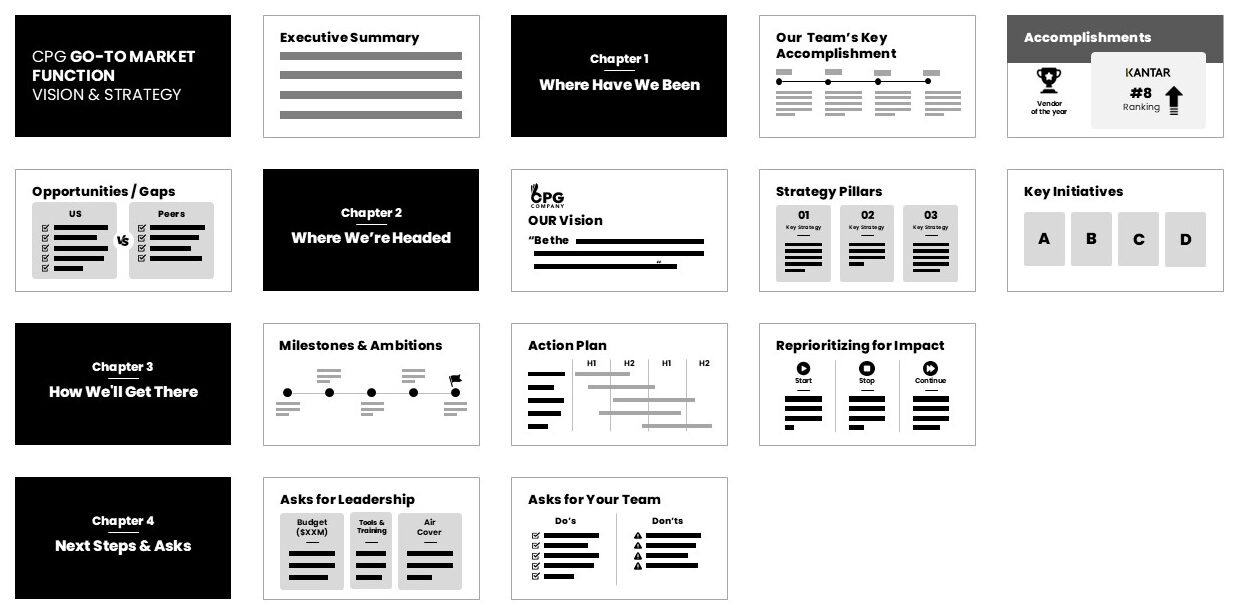
We recently worked on a Vision story for the head of Cat Man at a large snacking CPG. The deck had these 3 main chapters. This structure and ideas we share can serve as a strong starting point if you’re due to build a Vision for any CPG GTM function.

Illustrative presentation outline for a CPG company’s Vision & Strategy Deck

Chapter 1: Where You've Been

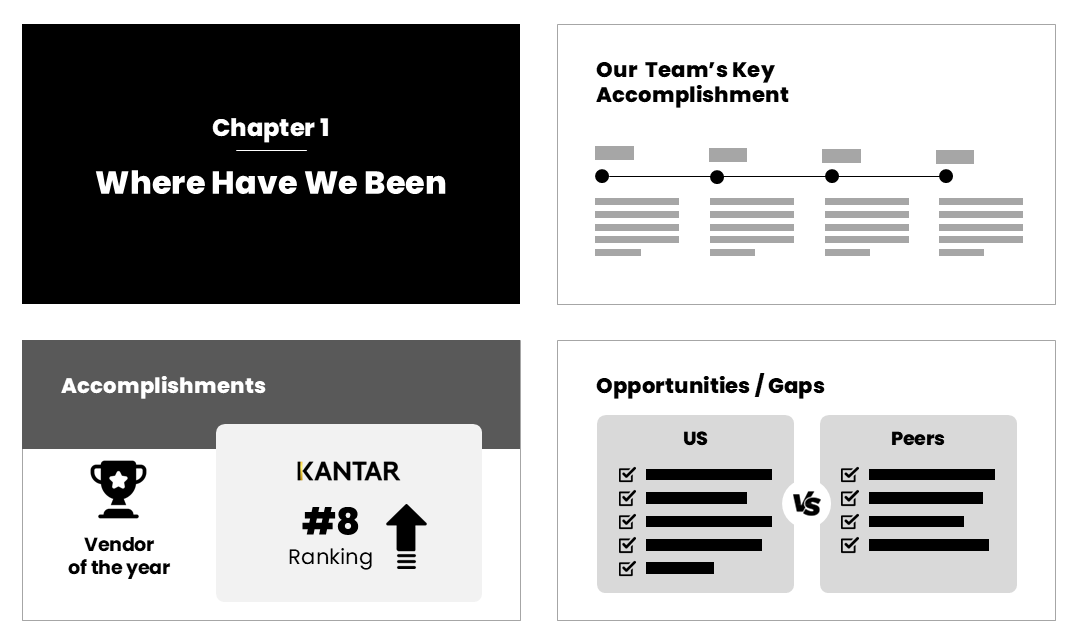
Set the stage by reflecting on your team’s journey. Before you talk about the future, show where you stand today: what’s working and what isn’t.


Highlight the wins. Remind stakeholders what your team has delivered, e.g., customer recognitions, a strategic initiative win with a retailer, strong launches, or sales and category growth you helped drive.

Acknowledge the gaps. Be honest about where improvement is needed. Examples could be:

    • A lagging Kantar or Advantage ranking versus peers
    • Not having a seat at the table with a key retailer
    • Too much time spent on reporting versus influencing
    • A need for more investment in shopper and consumer insights

Use both to make the case for change. The wins show your team is already building influence, collaboration, and trust with retailers. The gaps show what’s holding it back. Together, they make the argument: to keep that momentum, your team needs to invest further in its capabilities and move from tactical execution to strategic partnership, across the business and with retailers.

Chapter 2: Where You're Headed

Once you’ve set the stage, define the destination.

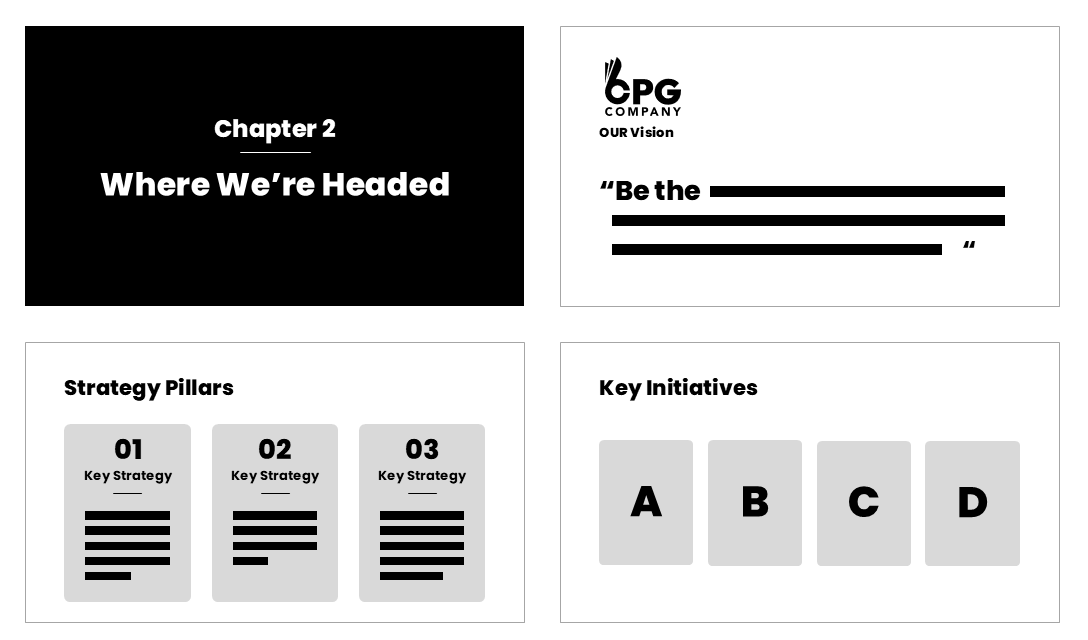
Articulate your vision. This is the future state you want, i.e., what your team should stand for over the next 2 to 3 years.

Support it with 3 to 4 bold pillars. The pillars are your strategy, the roadmap that gets you to your vision. The strongest pillars tend to be outward-facing. Here’s an illustrative set:

  1. Lead with an external lens. Put shopper, consumer, and retailer insights first, and bring forward-looking perspectives rooted in shopper, category, and retailer trends.
  2. Elevate category execution. Elevate shopability, optimize space, and provide actionable guidance from shelf strategy to planogram standards, so retailers and the category see consistent results.
  3. Build team capabilities. Develop the next generation of talent with AI, storytelling, and analytics that turn data into action.


A strong vision is both aspirational and grounded. It paints a clear picture that motivates your team and earns leadership trust.

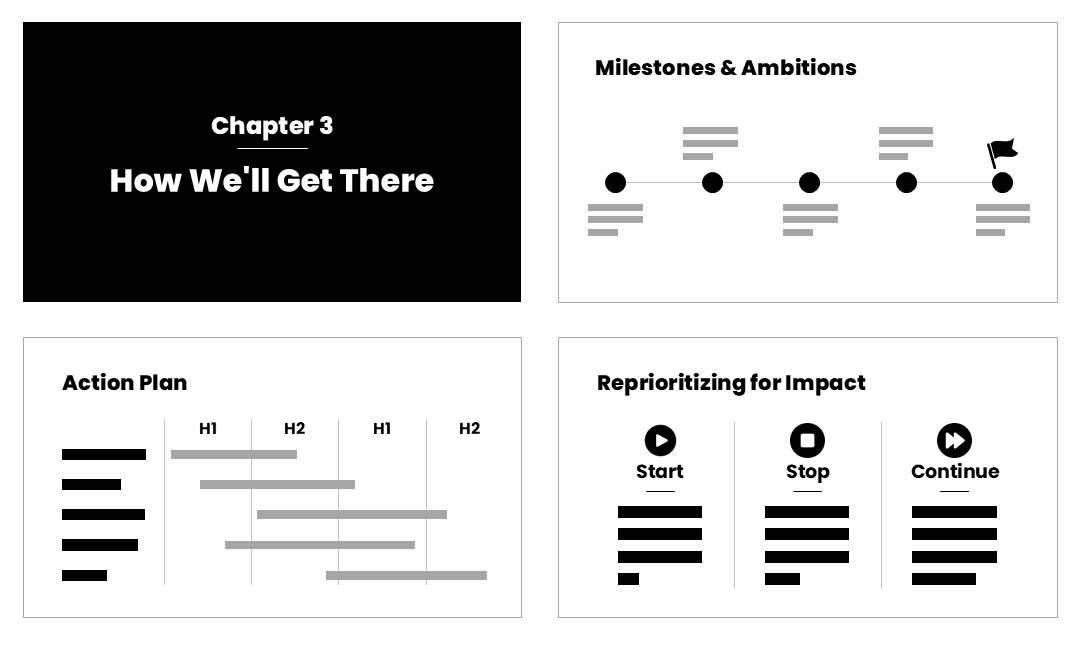
Chapter 3: How You'll Get There

Next, turn your vision and pillars into action.

Lay out milestones with ambitions. Show what success looks like and how you’ll measure it, e.g., improved retailer rankings, new captaincies, securing top-to-tops, and test-and-learns that prove the approach.

Address time and resources head-on. They will always be a constraint, and expect some resistance from your team as priorities shift. Give back time by automating or dropping low-value tasks. A Start / Stop / Continue reset can help your team reprioritize, freeing time for the higher-impact work your vision calls for. Here’s an illustrative version for a CatMan team:

  • Start: Spending more time on customer-specific insights and category growth ideas

  • Stop: Manual, repetitive reporting that can be automated

  • Continue: Building strong sales partnerships and customer collaboration

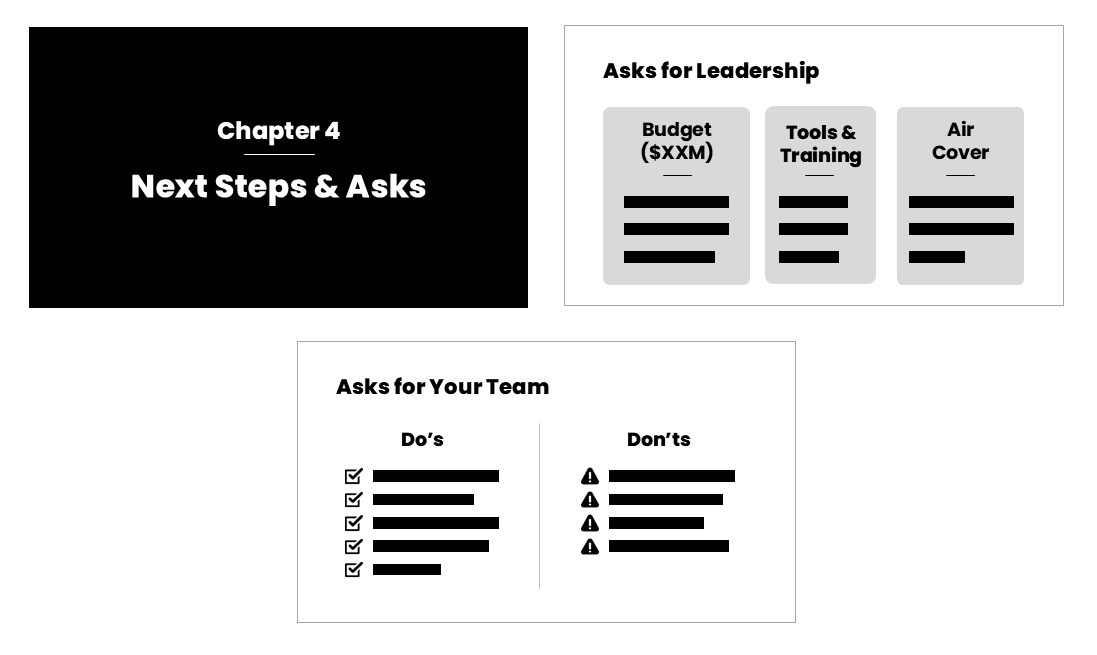
Chapter 4: End With Your Asks

Tailor your ask to the audience.

If you’re presenting to leadership, ask for what you need: budget, better tools and data, training, cross-functional support, and air cover to remove the barriers that slow your team down.

If you’re rallying your team, the ask is to change how you work: move beyond “rates and dates,” lean into deeper retailer influence, and take on bigger business problems.

To Sum It Up

Building your function’s vision isn’t a back-burner project. It aligns your team, sharpens your reputation, and helps you influence both inside and outside the company. Use the three chapters to get your Vision presentation started. Once you get going, more ideas will come.

Learn More About OUTKREATE's Sales, CatMan & Insights Solutions

OUTKREATE developes retailer-facing presentations for top CPG Cat Man & Insights teams, equipping them for success — be it Top to Tops, Innovation Selling Stories, Line Reviews & JBPs, and more.

Thinking of UPGRADING your Retailer-facing Presentation? 
TALK THROUGH YOUR PRESENTATION CHALLENGE

How does your Presentation measure up?

Do you have a major event or a high-stakes meeting coming up? Do you need a sharp narrative and bold design?

Let's connect and we can take a closer look at your presentations. We'll share with you actionable ideas along with real examples that you can apply to improve odds of success.

Book an introductory call