#1 What is the difference between category reporting and category growth architecture?
Category reporting recaps what already happened, like planograms and dashboards. Category growth architecture means reading the shopper and the opportunity to shape where the category goes next. Bala Gurumoothy, VP of Category Management at Ferrero USA, calls this “creating the news, not reporting it.”
#2 How can a brand lead a category without being the category captain?
Leadership in category management doesn’t need the captain title. It comes from an insight-led point of view, leading with the category gap and opportunity, not what the brand wants to sell. Ferrero earns this influence even where it isn’t the category leader, by helping retailers find new trip drivers.
#3 What is the “triple win” framework in category management?
The triple win means a recommendation has to work for the retailer, the shopper, and the brand. Ferrero’s team asks what the retailer values, the shopper needs, and the category needs to grow, then picks the lever, product, price, place, or promotion, that solves it.
#4 What does it mean for category management to be the “dot connector”?
It means linking insights, stakeholders, and strategy into shared action, not just a report. Ferrero’s team runs an annual Insights Day to align commercial functions around shopper truths, and stays plugged into sales forums so trends turn into action.
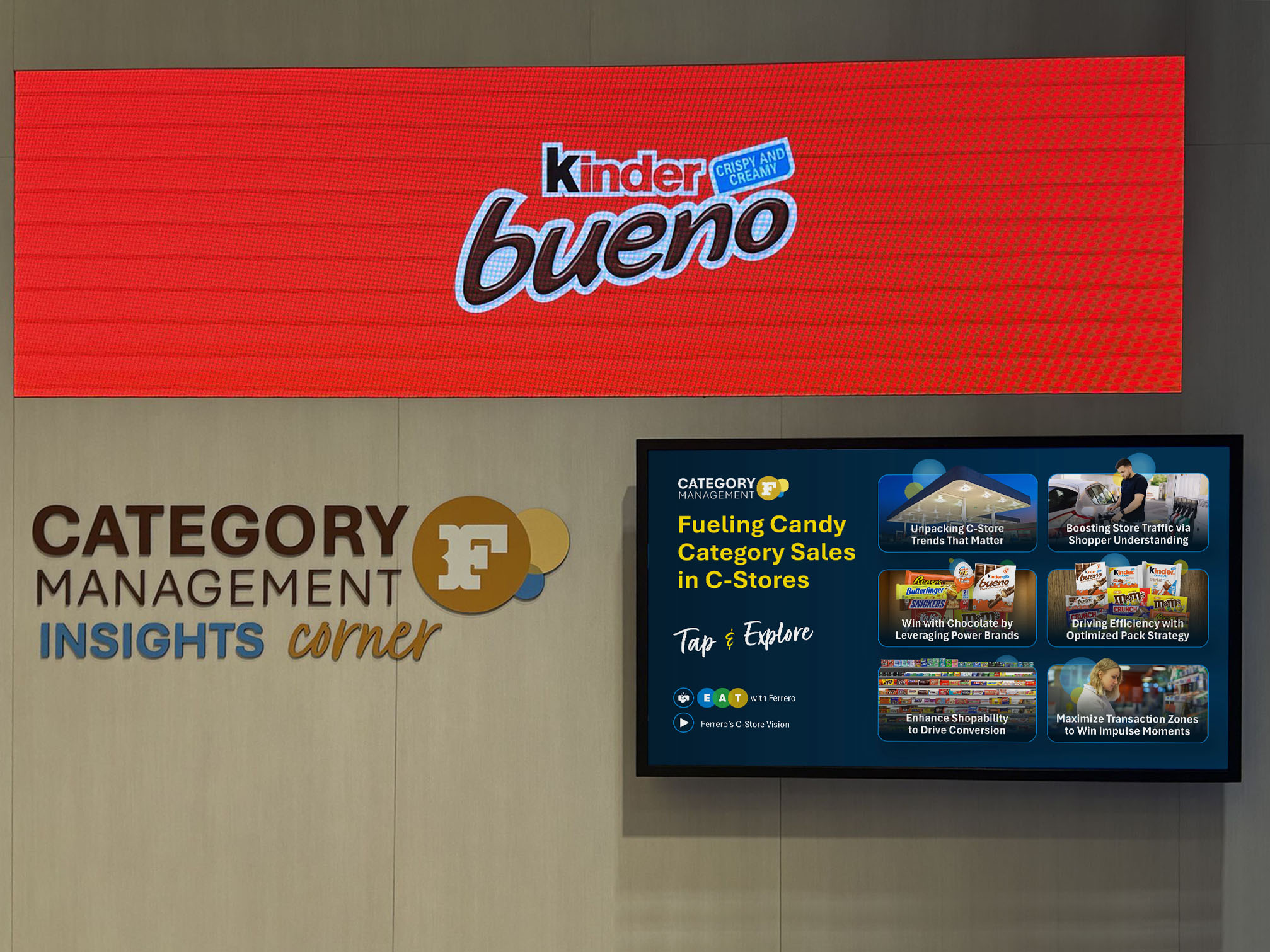
#5 How did Ferrero bring its category management strategy to life at a trade show?
At the NACS Show, Ferrero’s category team built a Category Corner with touchscreen storytelling and a Convenience Confection Playbook for C-store operators. The playbook gave retailers levers like singles vs. share-size packs and leaning into power brands and premiumization.